How to Move to GovCloud Without Breaking the Bank
Six months into a $250M build, a surprise compliance mandate forced a full migration to AWS GovCloud—without adding a single month of delay or blowing the cloud budget.
Overview
I led the cloud infrastructure and platform teams on a $250M custom product development replacing an insecure legacy system that the client had promised regulators they’d replace for years. If the go-live were delayed, the client faced penalties exceeding $500M. I worked relentlessly to ensure neither of my teams would be anywhere near the critical path—and we were on track to go live on time and on budget.
Then the phone rang at 7am on a Monday morning.
The Challenge
Six months in, my teams had built roughly 80% of the infrastructure and platform on standard AWS commercial cloud—exactly as specified in the signed contract and requirements. We were weeks away from completion.
The client CTO called me early one morning with a simple question: “Are we running our product in AWS GovCloud?” I told him no—our requirements and the signed contract specified standard AWS commercial cloud. He said thank you and hung up.
The next day, during our regular one-on-one, he lowered his voice and said: “Tim, I’m sorry to drop this on you, but the compliance team informed us that because the system holds Federal Tax Information, we have to move everything to GovCloud before the system can go live.”
Six months of infrastructure work. A hard go-live deadline backed by a $500M+ penalty. And now a full cloud migration that nobody planned for.
I tried every angle to avoid the migration—even brought in AWS’s own sales team and engineers to help make the case that commercial cloud could meet the compliance requirements. We simply couldn’t convince the client to change their mind. The compliance mandate was non-negotiable.
So the question became: how do you migrate everything you’ve built in six months without impacting ongoing development work and without adding a single month of delay?
The Solution
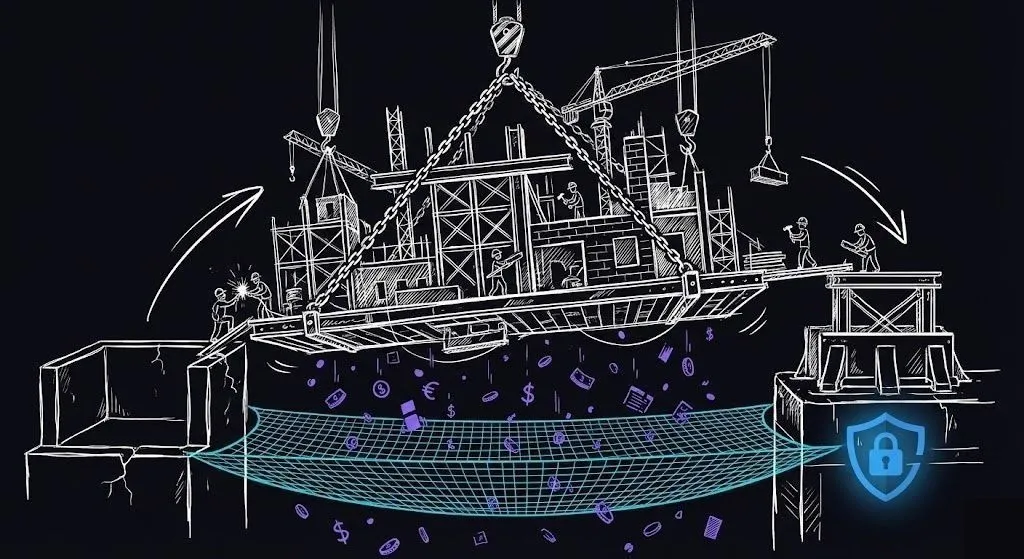
I worked with the client and engineering teams to create a migration roadmap with one non-negotiable constraint: zero impact to the go-live date. The centerpiece was aggressive FinOps monitoring—because if we ran out of cloud budget, we’d have nothing to go live on at all.
The plan had several key elements:
- Dedicated FinOps resources: I presented the case to leadership and secured full-time FinOps engineers to monitor and control cloud spend in real time
- Additional cloud and DevOps engineers: Surged the team to run migration work in parallel with ongoing development
- Phased milestones with concrete metrics: No ambiguity about what “on track” meant at each stage
- Multiple migration options: Presented several approaches with pros, cons, and risk profiles to leadership so we could make a deliberate choice rather than a panicked one
I trained the engineering teams to watch and control cloud spend like hawks. Every team understood the budget implications of their infrastructure decisions. GovCloud services run roughly 30% more expensive on average—without discipline, that premium alone could have blown the budget.
Results
We pulled it off.
- Zero delay: Kept the critical path intact despite a full cloud migration mid-project
- Cloud cost increase held to ~10%: Despite GovCloud services averaging 30% more, the aggressive FinOps monitoring and engineering discipline kept the actual spend increase to roughly a third of what it could have been
- No impact to development: Ongoing product work continued uninterrupted throughout the migration
- Client retention: As I completed my work and prepared to roll to another project, the CTO insisted I stay for an additional four months
Key Takeaway
FinOps isn’t optional—it’s infrastructure. When you’re facing an unplanned migration with a hard deadline and a fixed budget, financial discipline is as critical as technical execution. Train your teams to treat cloud spend as a first-class engineering concern, not an afterthought someone else worries about.
And sometimes the hardest part of the job isn’t the technical challenge—it’s absorbing a surprise that should never have been a surprise, and finding a path forward anyway.